




Antimicrobial resistance (AMR) is a global challenge that affects humans, animals and the environment alike. Close, interdisciplinary collaboration is essential to identify effective solutions. This is highlighted by two key events at ATB: The 11th General Assembly of the Leibniz Research Alliance INFECTIONS and the kick-off meeting of the new AiRisk research network. Both address pressing questions: How do resistant germs and pathogens spread, and what can we do about it?
Particularly in livestock farming, where many animals live together in confined spaces and antibiotics are frequently used, resistant germs can develop and spread more easily. The pathways through which these pathogens pass from animals to the environment and ultimately to humans are complex and not yet fully understood. This is where research comes in, to close knowledge gaps and develop effective countermeasures, in line with the One Health approach, which views the health of humans, animals and the environment as a single entity.
Leibniz Research Network INFECTIONS meets at ATB
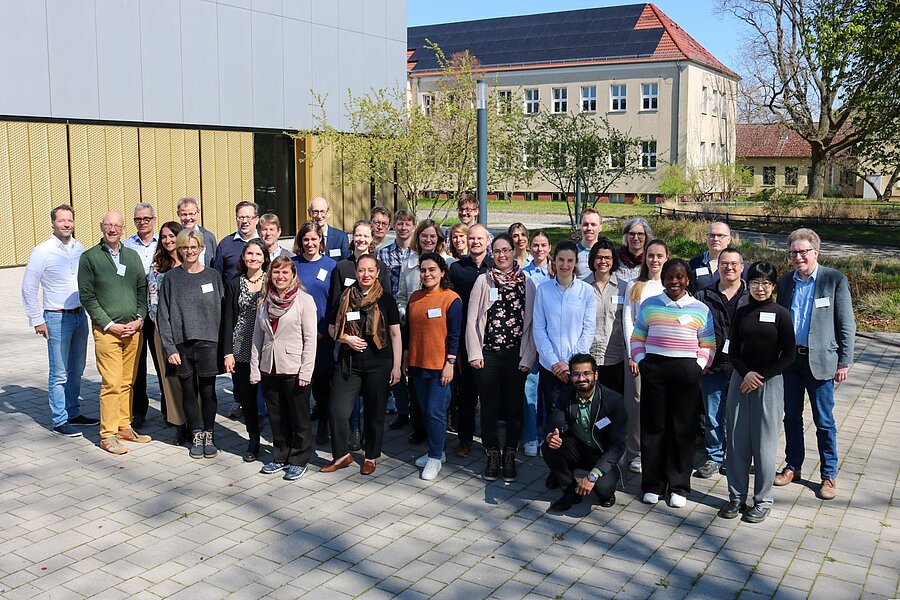
On 15 and 16 April 2026, the members of the Leibniz Research Network INFECTIONS gathered at ATB for their 11th General Assembly. For one and a half days, the focus was on an intensive exchange between 19 institutes on seven interdisciplinary research projects. In particular, the network’s PhD students were given a major platform to present their work and receive valuable feedback from established scientists. A key moment of the meeting was the handover of the role of spokesperson from Professor Ulrich Schaible to Professor Thomas Gutsmann, who will now lead the network into the future.
New AiRisk project launched: Focus on dust as a transmission route
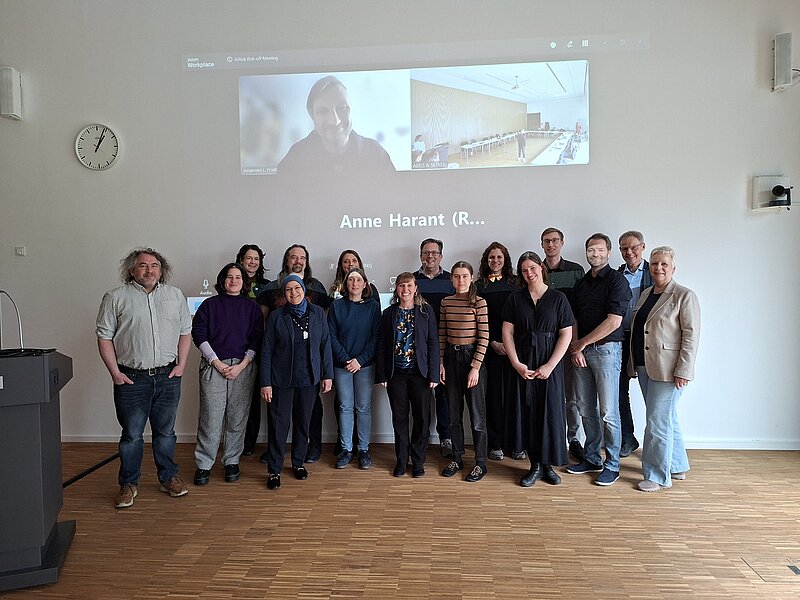
One day before the Leibniz INFECTIONS General Assembly, the kick-off for the AiRisk project took place at ATB. The project focuses on a previously underestimated transmission route for pathogens and AMR: dust. In this project, the researchers are investigating whether and to what extent dust particles play a decisive role in the spread of antibiotic-resistant bacteria and zoonotic pathogens from agriculture. Research findings suggest that dust increases the survival of bacteria in the air and reduces their susceptibility to disinfectants. In the project, the researchers are therefore analysing bioaerosols in and around pigsties to identify the bacteria and resistance genes attached to them. The aim is to conduct a comprehensive risk analysis that will serve as the basis for targeted intervention strategies.
We are delighted to have hosted these two important events. We look forward to further collaboration on this important topic.
Background
AiRisk: Network on the risk of airborne transmission
The exact mechanisms by which disease and zoonotic pathogens are transmitted to humans, animals and plants are not yet fully understood. AiRisk aims to close this knowledge gap by focusing on a novel route of transmission: dust. Dust forms an interesting link between the fields of One Health and facilitates the transmission of antibiotic-resistant (AMR) bacteria and zoonotic pathogens from agriculture into the environment, to wildlife and to humans.
Coordination: Robert Koch Institute (RKI)
Duration: expected April 2026 – March 2031
Funding body: Federal Ministry of Research, Technology and Space (BMFTR) as part of the funding programme “Pandemic Prevention and Response within a One Health Approach”.
Project management: German Aerospace Centre (DLR)
Leibniz INFECTIONS Network
The Leibniz INFECTIONS Research Network was founded in 2015 with the aim of addressing key questions in infection research. To this end, a multidisciplinary consortium comprising currently 16 Leibniz Institutes and 3 external scientific partners has been established. The interdisciplinary collaborative research focuses on antimicrobial resistance.
https://leibnizinfections.de/
ATB
The Leibniz Institute for Agricultural Engineering and Bioeconomy (ATB) researches and develops systemic-technical solutions for the sustainable transformation of agricultural, energy and food systems. The focus is on practical innovations that combine ecological impact, economic viability and societal requirements.
ATB conducts its research in close collaboration with the agricultural sector, industry and policy-makers – driven by a desire for knowledge and inspired by practical application.
www.atb-potsdam.de
Contact
Dr Tina Kabelitz
Head of working group "Infections and AMR in livestock"
Tel.: +49 331 5699-521
Email: TKabelitz@atb-potsdam.de