





Rethinking packaging.
Towards system-level solutions and reduced food lossRethink Packaging in Fresh Produce Systems
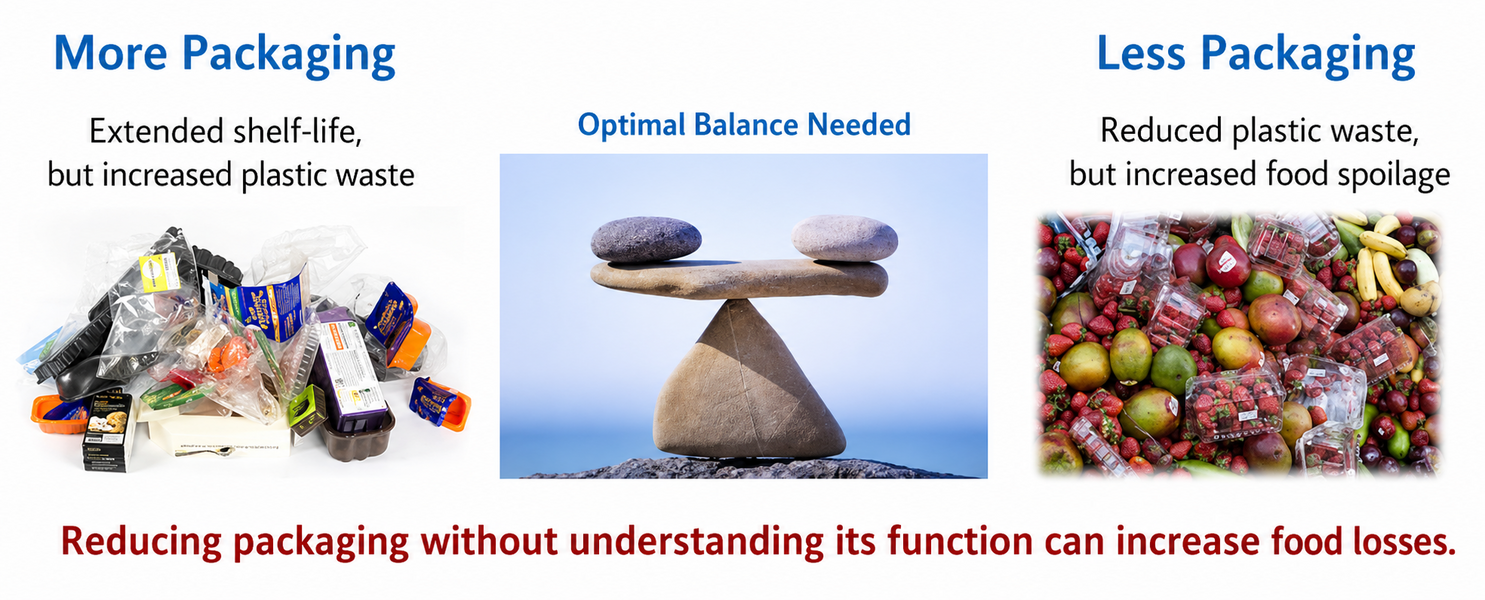
Packaging in fresh produce is often framed as a sustainability problem, but this view is incomplete. However, it is also a critical tool for maintaining quality and preventing food losses. At ATB, we approach packaging not as an isolated material, but as part of a complex system involving product physiology, storage conditions, and supply chains. This perspective is particularly relevant in light of current regulatory developments such as the EU Packaging and Packaging Waste Regulation (PPWR). Fresh fruits and vegetables are biologically active systems. Their respiration, moisture release, and sensitivity to environmental conditions require packaging solutions that go beyond containment. Packaging must actively support product stability from harvest to consumption.
From Materials to Systems in Fresh Produce Packaging
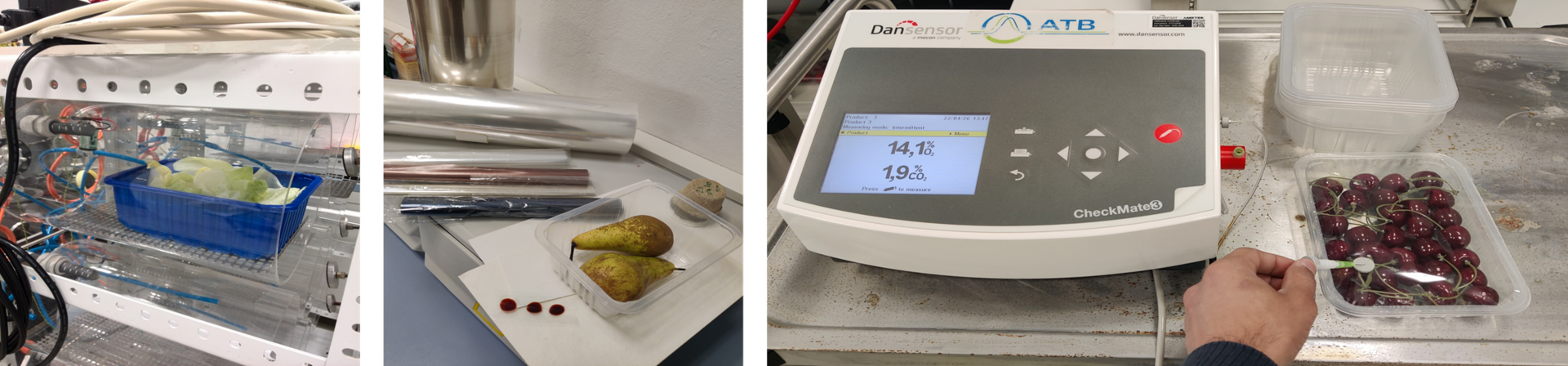
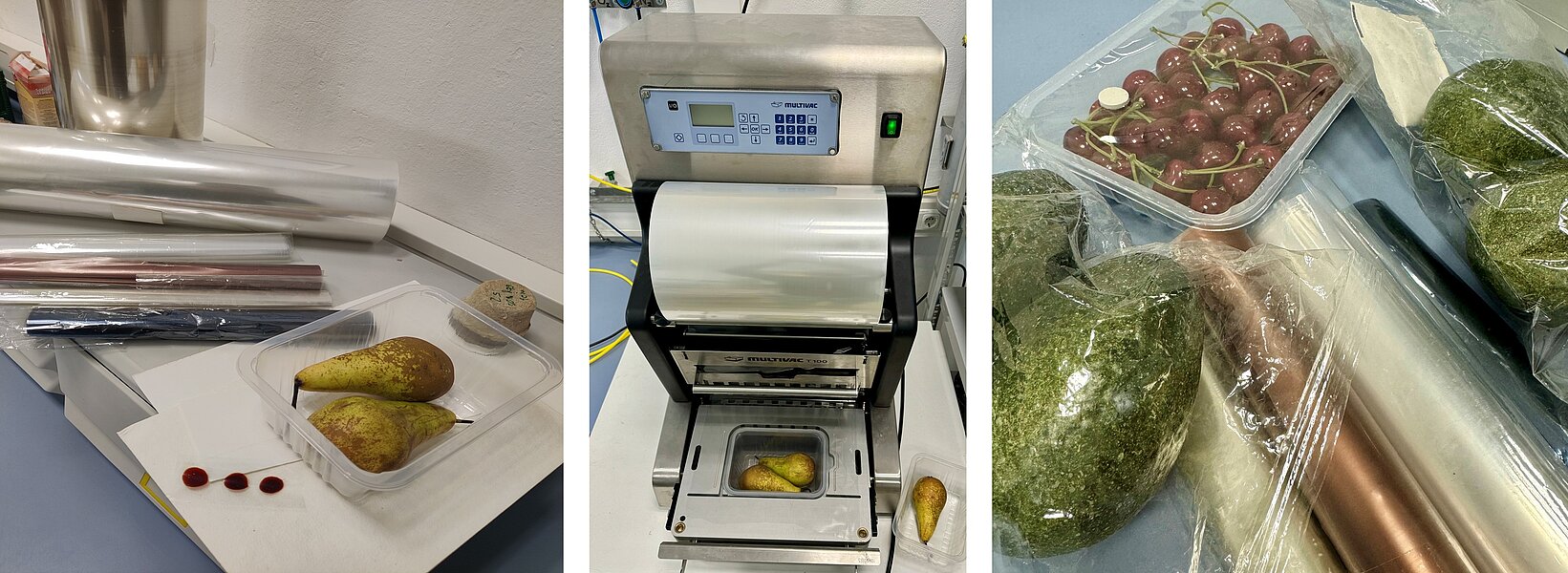
Much of today’s discussion focuses on replacing conventional plastics with alternative materials. While materials derived from renewable resources, such as fibre-based structures, coated paper systems, cellulose films, or PLA-based materials, offer promising pathways, their success depends on how they perform in real conditions. At ATB, we focus on understanding packaging as a functional system, where material properties, product behaviour, and environmental conditions interact. Our research integrates:
experimental studies under realistic storage conditions
sensor-based monitoring of temperature, humidity, O2, CO2 and ethylene
modelling of product-environment interactions
development of system-level packaging concepts
This approach enables us to design packaging solutions that are tailored to specific products and supply chains, rather than relying on generic material substitution.
Bridging the Gap Between Innovation and Practice
Over the past decades, many promising packaging concepts often succeed in laboratory settings but fail when exposed to real supply chain conditions. High humidity, condensation, temperature fluctuations, and mechanical stress impose demanding requirements that are often underestimated. Our work addresses this gap by validating packaging solutions in realistic environments, including cold storage and transport conditions. This ensures that innovations are not only technically feasible but also robust and scalable in practice.
Functionality, Sustainable Packaging, and End-of-Life
Sustainable packaging cannot be defined by material origin alone. A solution must:
protect the product and maintain shelf life
function reliably under real conditions
fit within existing recycling or disposal systems
Current regulatory developments, such as PPWR, place strong emphasis on reducing packaging and improving recyclability. While these goals are important, they must be evaluated within the context of the entire system, including their impact on product protection and food losses. It is important to distinguish between material origin and end-of-life behaviour: a material can be derived from renewable resources without being biodegradable, and biodegradable materials may not always be compatible with existing waste systems. Without this system perspective, well-intended solutions may create unintended consequences, such as increased food losses or inefficiencies in recycling.
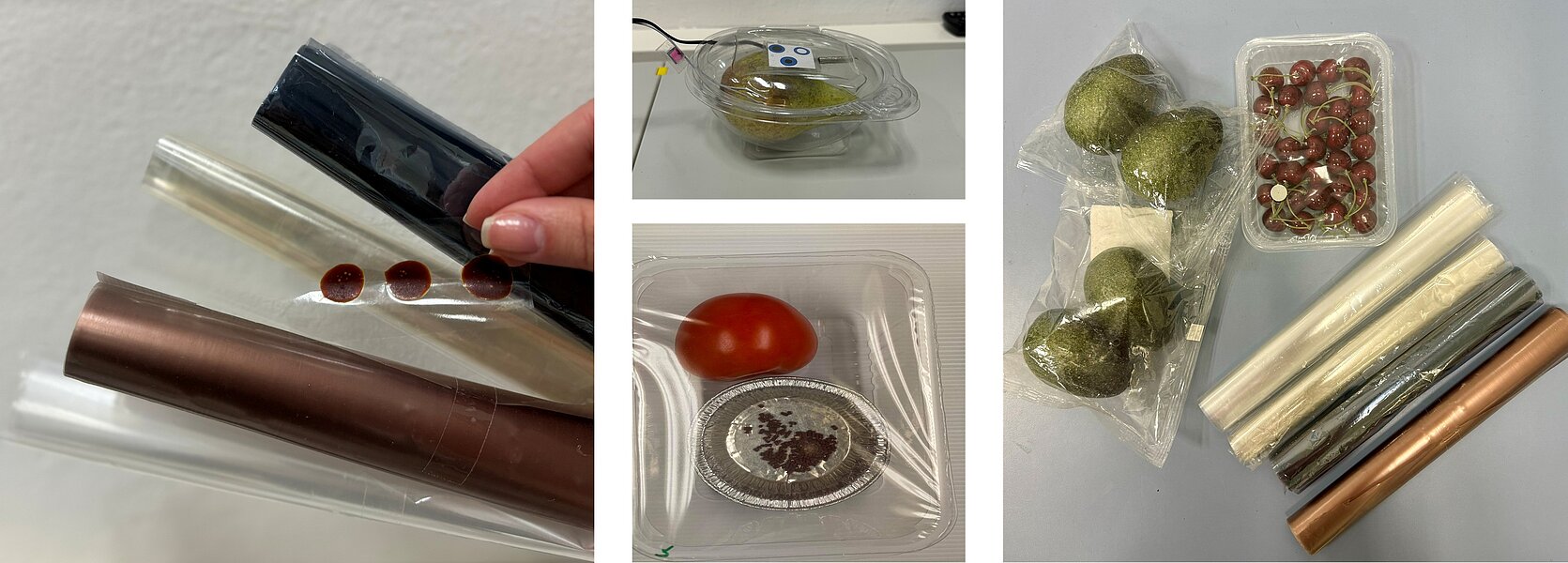
Our Research Focus
Our work addresses key challenges in fresh produce packaging:
managing the moisture and condensation
controlling the gas exchange and modified atmosphere systems (O₂, CO₂, Ethylen)
understanding the interaction between packaging and product physiology: respiration and transpiration
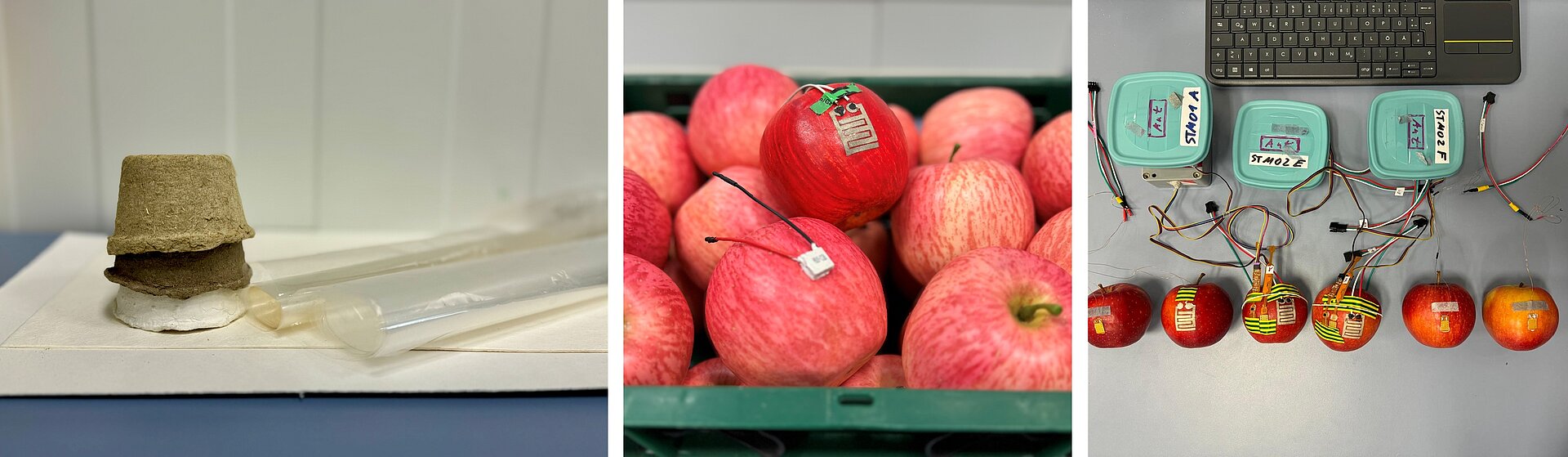
integrating sensor and real-time monitoring
implementing models and digital twin approaches for storage and packaging
By combining experimental and digital methods, we aim to better understand and control the conditions that determine product quality.
Looking Ahead
Future packaging solutions will move beyond simple material substitution toward integrated systems that combine material design, product physiology, and digital technologies. Sustainable packaging in fresh produce is not defined by the material alone, but by how effectively it works in practice.
The goal is to develop solutions that are:
functionally reliable
economically viable
scalable across supply chains and
compatible with existing recycling and waste management systems.
Interested in Collaboration?
We welcome collaboration with partners across the fresh produce value chain to develop and validate packaging solutions that work in practice. Please feel free to contact us for potential joint projects or research partnerships.
More on our research: WG Packaging and Storage
Selected research projects on the topic
-
Food packaging is designed to protect the food through its supply chain, communicate to customers, and to ensure food quality, safety and optimal shelf life. Progress is now needed to secure its circularity, minimize fo…

Start:
End:
29.10.2020
28.10.2024
Funding authority:
Europäische Union (EU)
-
This project aims to make use of the potential of integrative mathematical modeling to provide a comprehensive simulation approach for prediction of fresh produce physiological behavior with storage and packaging conditi…
Start:
End:
01.03.2018
28.02.2022
Funding authority:
Bundesministerium für Landwirtschaft, Ernährung und Heimat (BMLEH)
-
Currently, the material of choice for trays for fresh food packaging like meat is mainly thermoformable plastic (PET, PP or PS) or plastic-paper composite materials. However, the recovery rate of those materials is still…
-
Packaging of fruit and vegetables is necessary to extend shelf life and increase safety. The use of plastic packaging is increasingly coming under criticism. An alternative can be the coating - a thin film on the surfac…
Start:
End:
01.09.2020
30.09.2021
Funding authority:
QS-Wissenschaftsfonds Obst, Gemüse und Kartoffeln vertreten durch QS Fachgesellschaft Obst-Gemüse-Kartoffeln GmbH
Selected publications
- Mahajan, P.; Pathak, N.; Grossi Bovi Karatay, G.; Ntsoane, L.; Jalali, A.; Keshri, N.; Rux, G.; Praeger, U.; Geyer, M. (2020): Recent advances on packaging and storage technologies for the preservation of fresh produce. Reference Module in Food Science. : p. 1-21. Online: https://doi.org/10.1016/B978-0-08-100596-5.23040-0
- Keshri, N.; Truppel, I.; Herppich, W.; Geyer, M.; Mahajan, P. (2021): Modular sensor-based respirometer for real-time monitoring of respiration rate. Acta Horticulturae. : p. 297-302. Online: https://doi.org/10.17660/ActaHortic.2021.1311.37
- Keshri, N.; Truppel, I.; Linke, M.; Geyer, M.; Weltzien, C.; Mahajan, P. (2021): Development of a Controlled-Ventilation Box for Modified-Atmosphere Storage of Fresh Produce. Foods. (12): p. 2965. Online: https://doi.org/10.3390/foods10122965
- Pathak, N.; Caleb, O.; Rauh, C.; Mahajan, P. (2019): Efficacy of photocatalysis and photolysis systems for the removal of ethylene under different storage conditions. Postharvest Biology and Technology. (January): p. 68-77. Online: https://doi.org/10.1016/j.postharvbio.2018.09.006
- Jalali, A.; Linke, M.; Geyer, M.; Mahajan, P. (2021): Integrative programming for simulation of packaging headspace and shelf life of fresh produce. MethodsX. : p. 101514. Online: https://doi.org/10.1016/j.mex.2021.101514
- Jalali, A.; Linke, M.; Mahajan, P. (2021): Model for simulation of gas, moisture and condensation dynamics in packaged fresh produce. Acta Horticulturae. : p. 263-272. Online: https://doi.org/10.17660/ActaHortic.2021.1311.33
Weitere Projekte zum Thema suchen ...
Search for more publications on the topic ...