




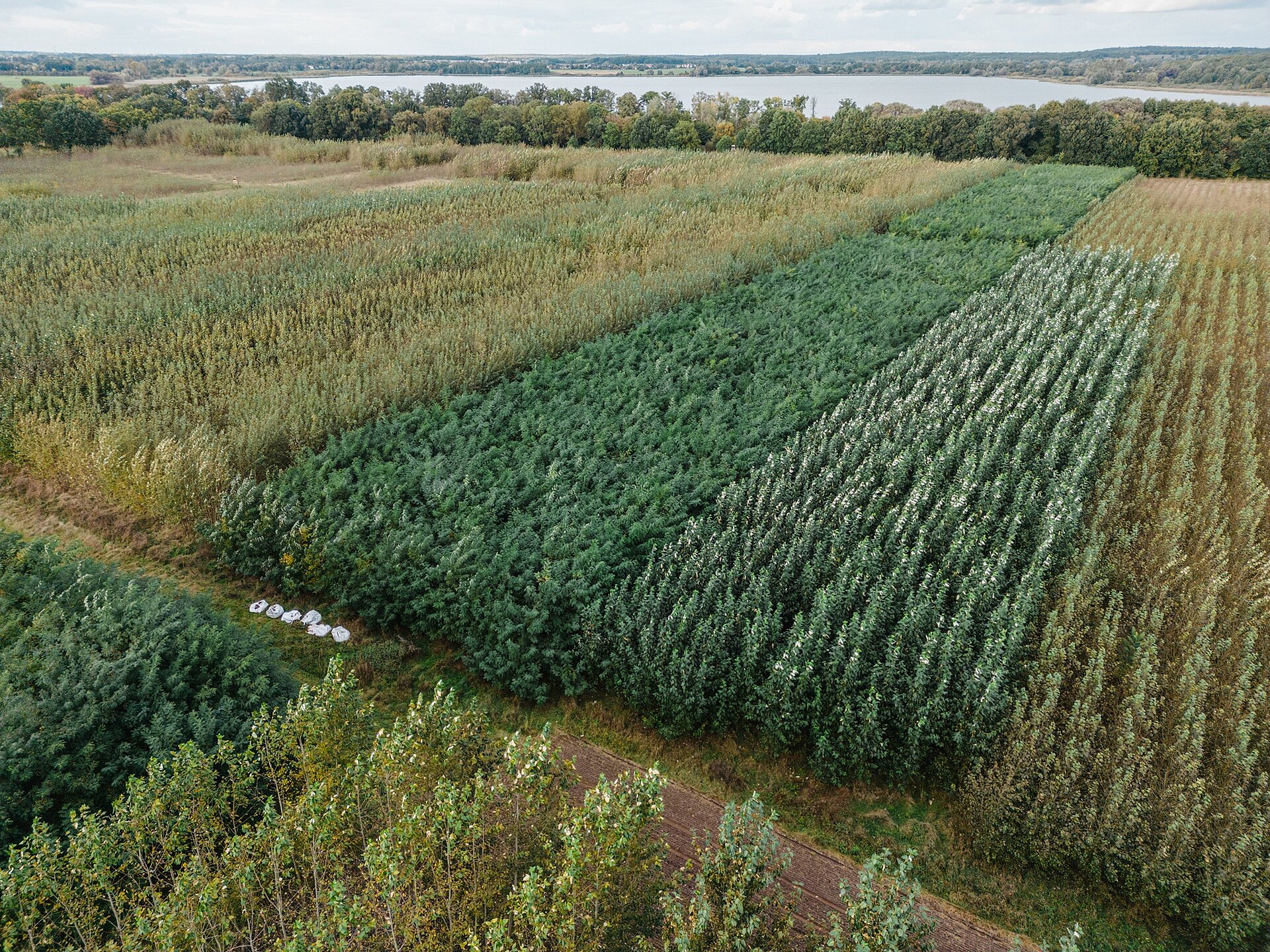
Since 1994, ATB has been conducting intensive research at its Potsdam-Bornim site into the cultivation, harvesting, storage and utilisation of fast-growing tree species in agriculture. These include poplars, willows and black locusts. To this day, the long-term trial at ATB continues to provide extensive data. This makes the ATB Campus Bornim one of the longest-running trial sites for short-rotation coppice in Germany.
Potsdam-Bornim Campus
ATB’s experimental plots in Potsdam-Bornim cover 36 hectares, on which poplars now predominate. These include a wide variety of cultivars characterised by high yields combined with good resistance to drought and pests.
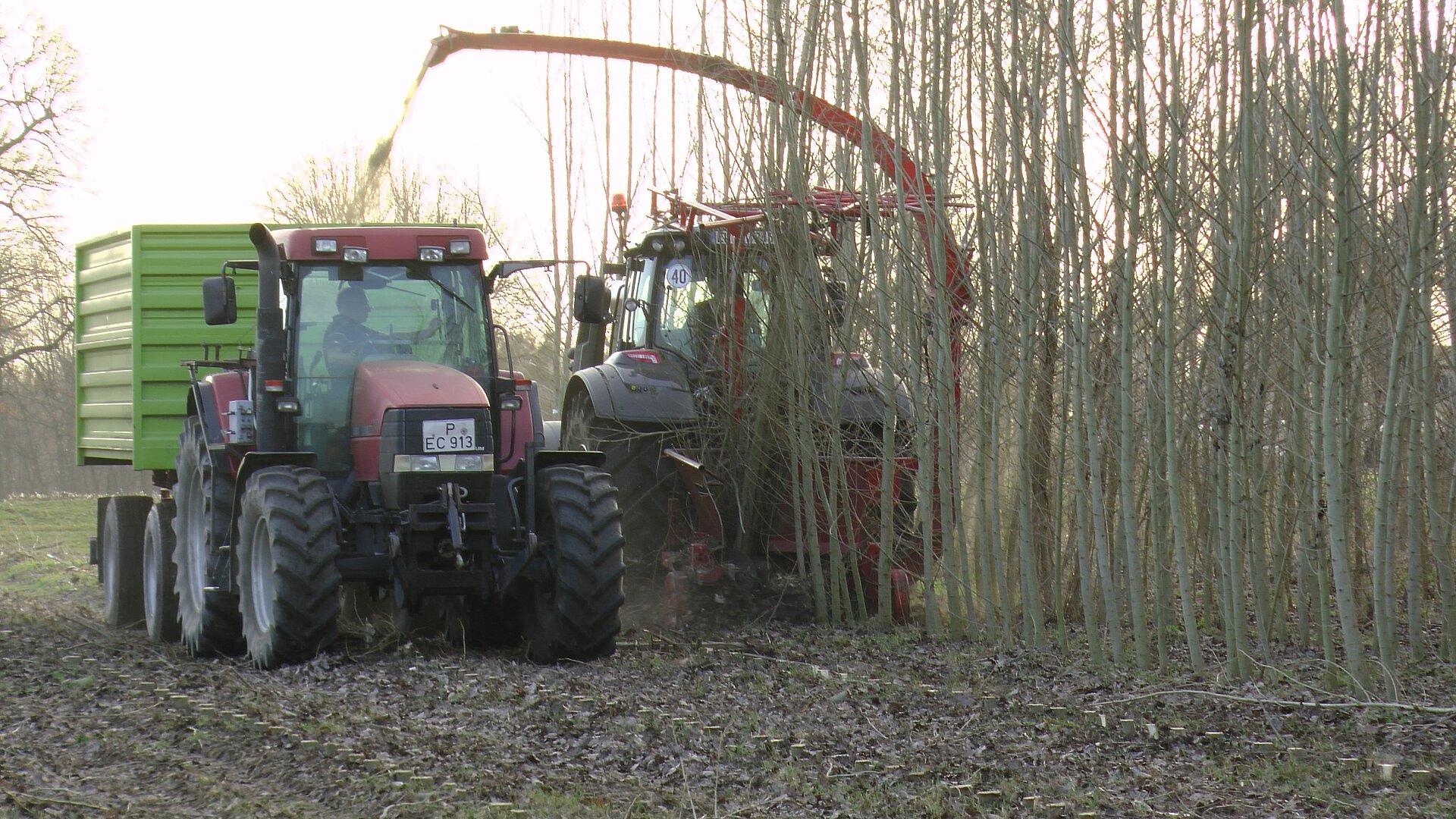
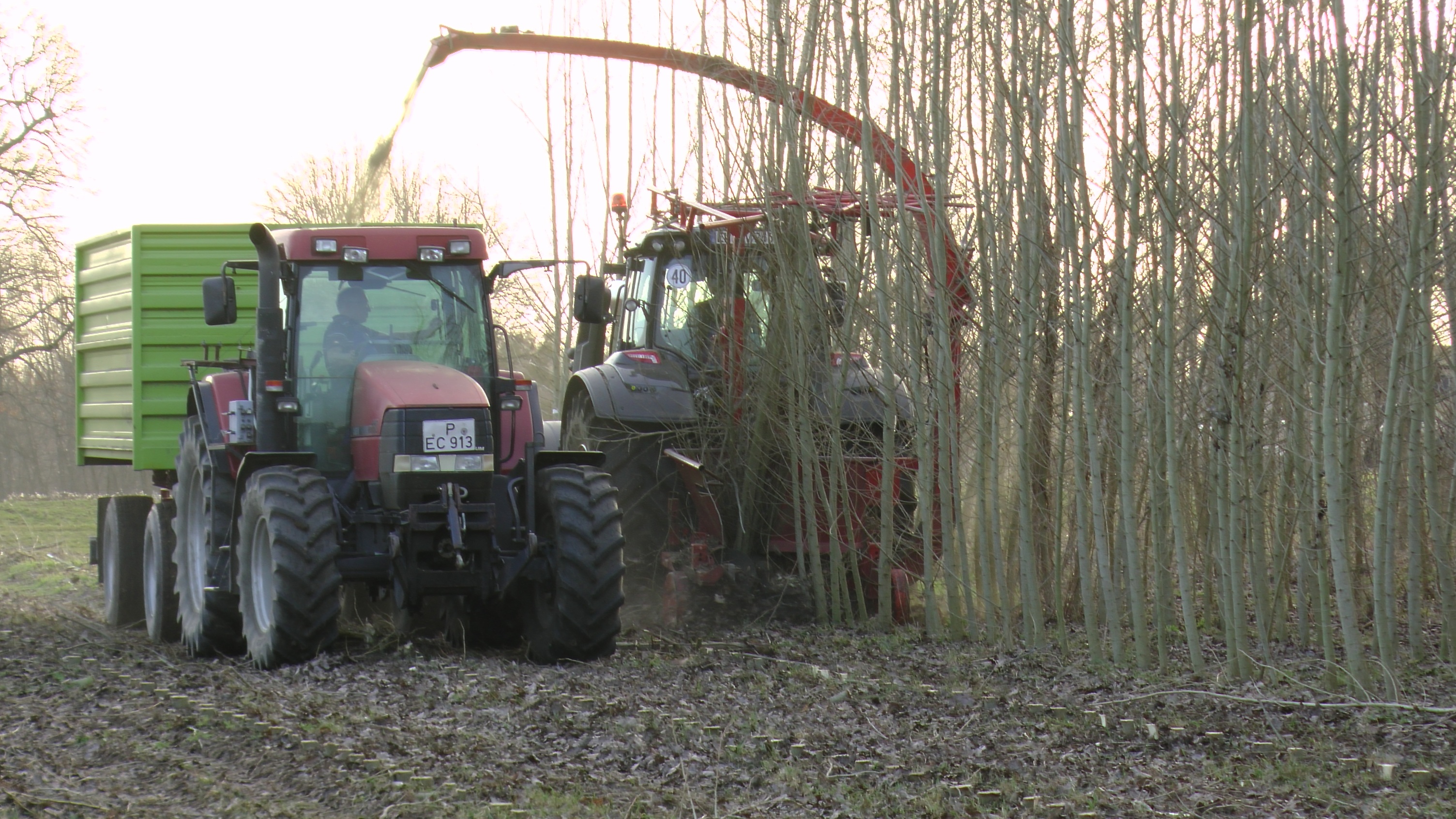
In 2019, ATB installed a wood chip heating system to supply heat to the institute’s premises. The poplars, willows and black locusts provide approximately 50% of the energy required. They are harvested using a mower-chipper developed at ATB.
Research on the short rotation coppice and in agroforestry systems
Initial trials on the ATB campus aimed to identify fast-growing and, as far as possible, undemanding woody plants that can be harvested at short and medium-rotation intervals and used for energy. Poplars and other fast-growing woody plants in short rotation or agroforestry systems not only provide wood chips for climate-neutral heat generation. They also reduce soil erosion, increase the humus content in the topsoil, sequester CO2 in the root zone, enhance biodiversity, serve as windbreaks, and provide protection from summer heat in agroforestry systems.
The initial trials in 1994 thus led to further extensive long-term trials addressing various topics:
- Cultivation of fast-growing trees in agroforestry systems,
- Emissions of soil-borne greenhouse gases and the long-term storage of CO₂,
- Development of new techniques and methods for harvesting and storage,
- Conversion of land used for wood production back to arable land and grassland.
In addition to the use of agricultural wood for energy, another focus of our research is the development of modern processes for the sustainable production and use of wood for material applications. Here, the wood or the plant fibres derived from it can be used primarily in the construction, pulp and paper industries or as a raw material for biobased chemicals.