




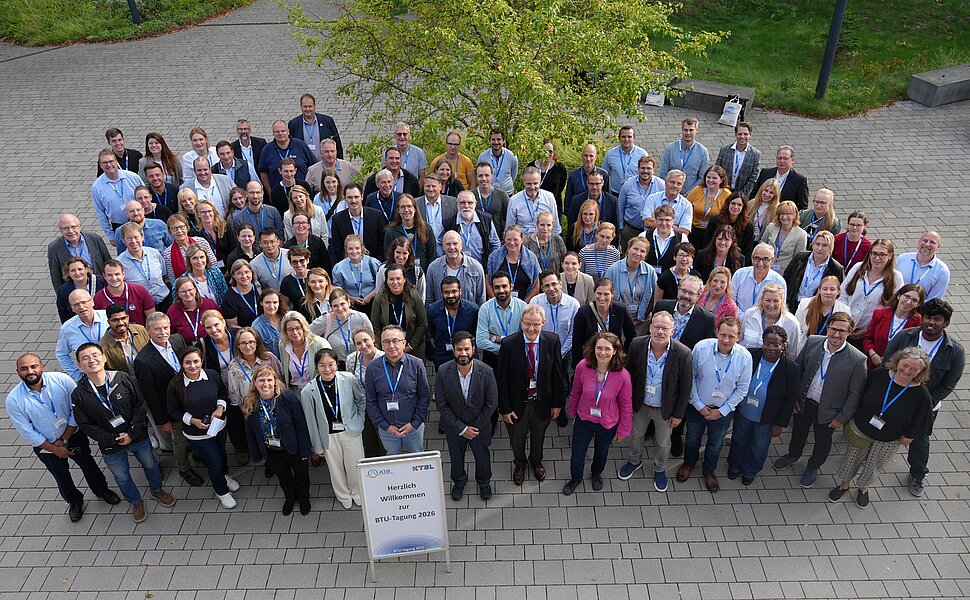
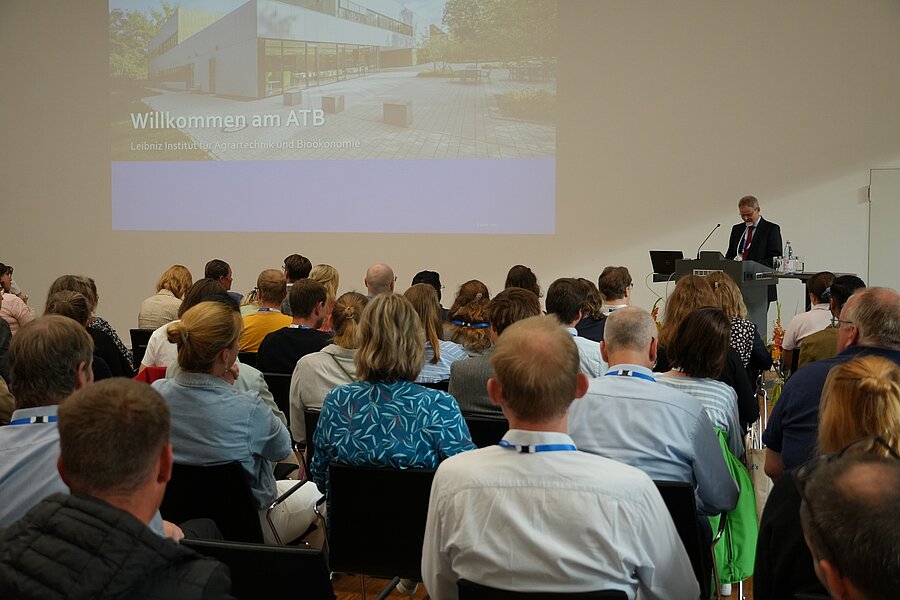
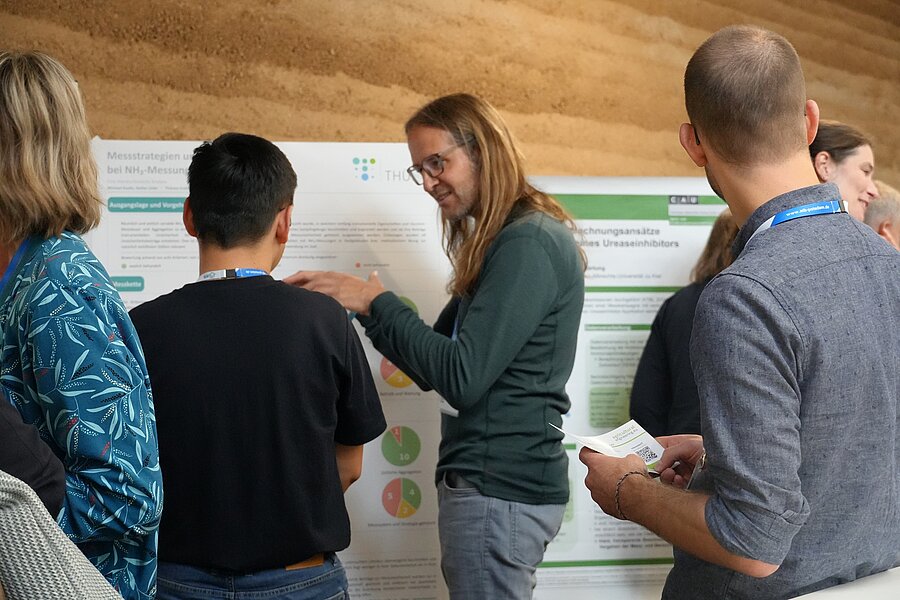
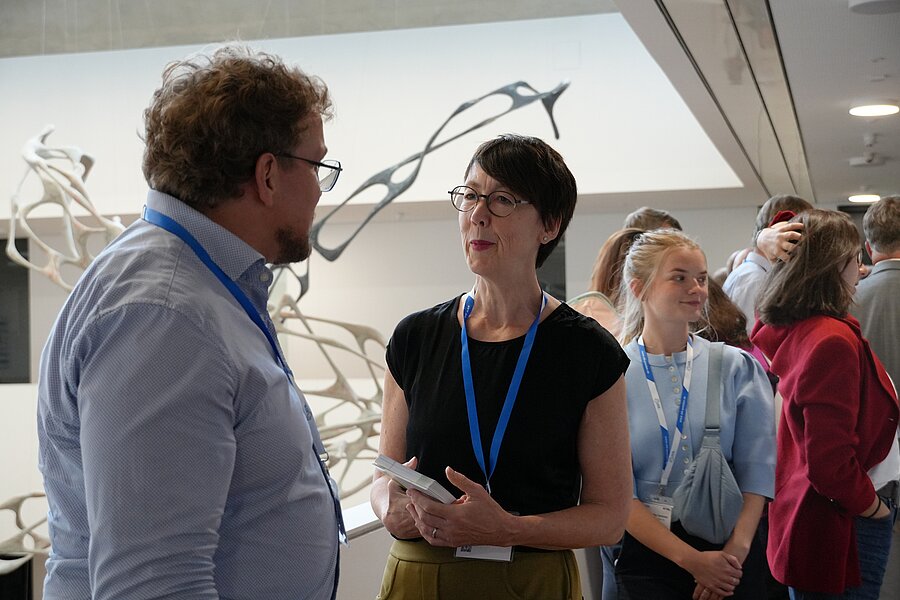
How can animal welfare and health, climate and environmental protection, and economically viable livestock farming be developed together? At the 17th ‘Construction, Technology and Environment in Agricultural Livestock Farming’ conference (BTU), held from 15 to 17 September at the Leibniz Institute for Agricultural Engineering and Bioeconomy (ATB) in Potsdam, around 130 experts from the fields of science, agriculture, business, consultancy and administration discussed innovative solutions for the livestock farming of the future.
Livestock farming is facing profound change. A secure and high-quality food supply must be reconciled with increasing demands on animal welfare and health, climate and environmental protection, resource efficiency and economic viability. At the same time, increasing heatwaves, new biosecurity requirements and the necessary restructuring of housing systems present agriculture with additional challenges. What is therefore needed are integrated solutions in which architectural concepts, innovative technologies and a biological understanding of the animals are interwoven. This was precisely the focus of BTU 2026, which featured more than 60 specialist presentations.
A key focus was on new approaches to measuring and reducing ammonia and greenhouse gas emissions from livestock farming. Among other things, innovative housing and flooring concepts, methods for manure management and the separation of faeces and urine, as well as various approaches to reducing methane and ammonia emissions, were presented. It became clear that emission reduction, animal welfare, animal health and housing climate cannot be considered in isolation from one another.
Digital assistance systems and so-called precision livestock farming were also the subject of intensive discussion. Sensors, camera systems and, increasingly, AI-based methods make it possible to continuously monitor animal behaviour, animal health, housing climate and emissions. However, it is crucial to derive reliable information from the growing volumes of data and, on that basis, to make concrete management decisions. Under the title ‘From Sensor to Decision’, participants addressed this challenge right at the start of the event in a practical workshop. A field trip to Gut & Bösel complemented the programme by providing a first-hand insight into agricultural practice.
Another key focus was biosecurity within the One Health context. In his keynote address, Prof. Dr. Dres. h. c. Thomas C. Mettenleiter highlighted the close link between animal health, human health and the environment. Specialist presentations on biosecurity, bioaerosols, antibiotic resistance and decontamination procedures explored this perspective in greater depth. The second keynote address, delivered by Gregor Beckmann, Managing Director of Lely Deutschland GmbH and Cluster Manager for Germany, Austria and Switzerland (DACH), focused on innovation as the key to future dairy production and the opportunities offered by automation and digitalisation.
Prof. Dr Thomas Amon, head of department and spokesperson for the Programme Area ‘Individualized Livestock Production’ at ATB, as well as chair of the BTU 2026 Programme Committee, drew a positive conclusion: ‘The conference has shown very clearly that we cannot optimise animal welfare, animal health, environmental impacts and economic efficiency in isolation from one another. We need integrated solutions for complex systems. Digitalisation, sensor technology and artificial intelligence open up new possibilities in this regard. However, technology is not an end in itself. It must create tangible added value for the animal, for people, for the environment and for the farm.”
Background
The symposium ‘Construction, Technology and the Environment in Livestock Farming’ (BTU) takes place every two to three years at different venues and is an established scientific forum within the field. The 17th BTU took place from 15 to 17 September 2026 at the Leibniz Institute for Agricultural Engineering and Bioeconomy (ATB) in Potsdam. The event was co-organised by the Board of Trustees for Agricultural Engineering and Construction (KTBL), the Max Eyth Society for Agricultural Engineering within the VDI (VDI-MEG) and the European Society of Agricultural Engineers (EurAgEng).
The conference proceedings, containing the technical papers, as well as further information on BTU 2026, are available at www.btu-tagung.de.
Contact
Prof. Dr Thomas Amon
Telephone: +49 331 5699-510
Email: tamon@atb-potsdam.de
Dr Ulrike Glaubitz
Referentin für Presse- und Öffentlichkeitsarbeit
Telephone: +49 331 5699-820
Email: presse@atb-potsdam.de