





An additive based on calcium cyanamide can significantly reduce climate-relevant emissions from the storage of manure and fermentation residues, increase nitrogen efficiency and, at the same time, increase methane yield in biogas plants. This is shown by the results of the EMeRGE research project, which was carried out by the Leibniz Institute for Agricultural Engineering and Bioeconomy (ATB) in collaboration with Alzchem Trostberg GmbH. The product under investigation is already available for agricultural use.
A major lever in livestock farming
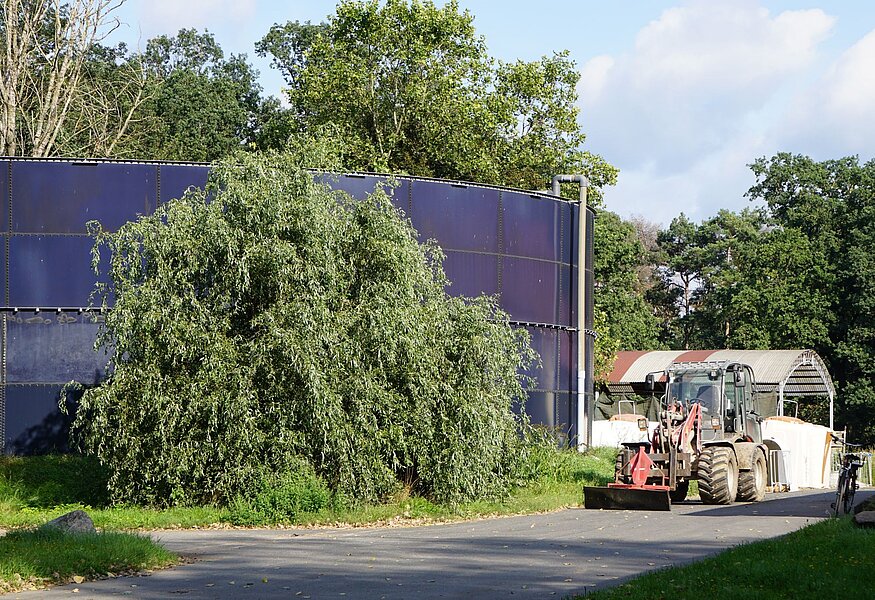
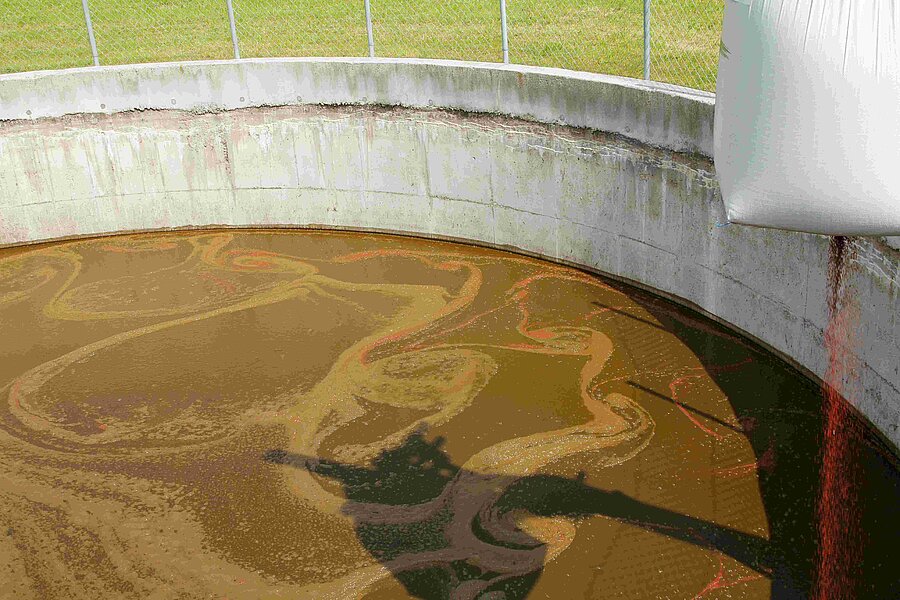
Around one-fifth of methane emissions from livestock farming in Germany are generated during the storage of farm manure. Technical mitigation measures such as gas-tight covers for manure stores are effective, but often involve high construction and financial costs. In the EMeRGE project, the researchers therefore specifically investigated the reduction potential of a technically simple and flexible additive that can be implemented on almost any farm while reducing costs and operational risks.
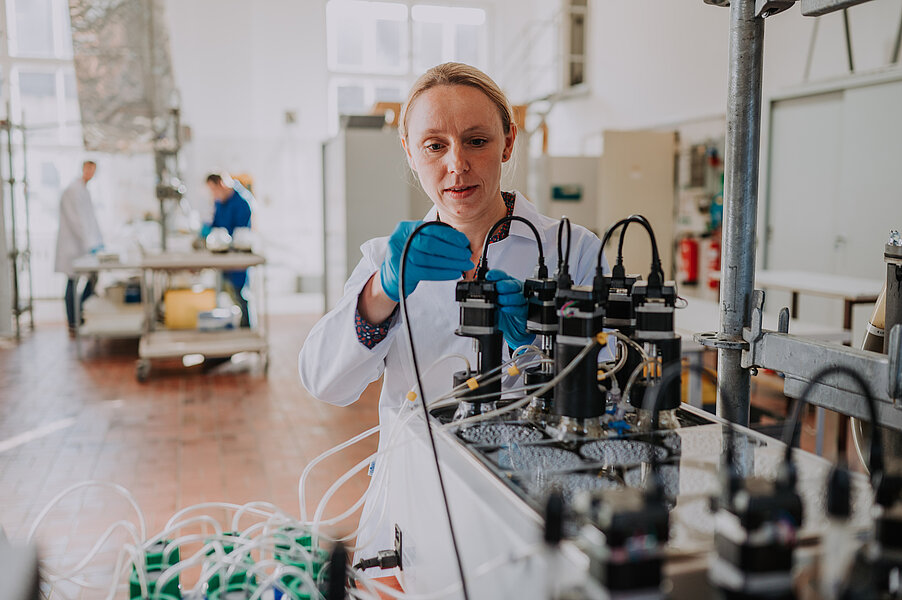
‘Microorganisms normally have free rein in manure storage facilities,’ explains Dr Christiane Herrmann, programme area spokesperson for ‘Integrated Residue Management’ at ATB and project manager. ‘They metabolise the organic material and release climate-damaging gases such as methane in the process. By adding calcium cyanamide, we temporarily inactivate the microorganisms.’
Up to 97 percent less methane from manure storage
"The results of our investigation with calcium cyanamide show a very high reduction potential for climate-damaging emissions. In summer, we were able to reduce methane emissions from cattle and pig manure by up to 97 percent. This figure is based on pilot-scale trials, but we confirmed it through realistic trials on a 1,000-litre scale," said the expert.
There was also a significant reduction at lower temperatures in winter and with fermentation residues. However, the relative reductions in methane emissions achieved were slightly lower, or higher doses of the additive were required. Nitrous oxide (N₂O) emissions were also significantly reduced during manure storage, but not after spreading on the field, as tests in the ATB's Field Lab for Digital Agriculture showed.
More biogas, better nitrogen utilisation
‘In most cases, manure is to be applied to the field as organic fertiliser. Since calcium cyanamide in storage ensures that the nitrogen in the manure is converted with a significant delay, more nutrients remain available for the plants,’ says project coordinator Dr Herrmann. ‘As a result, farms need to purchase less mineral fertiliser. In regions with high livestock farming, this can reduce fertiliser costs by up to 22 percent.’
Methane-producing microorganisms play an important role in biogas production. Farmers need not worry if manure treated with calcium cyanamide is added to the biogas plant. "The inactivation of the microorganisms is only temporary. Under the right conditions, such as appropriate dosing and compliance with a minimum storage period, no inhibition is to be expected in the biogas plant. With longer storage periods of more than 14 days and warm storage temperatures, the treated manure can even significantly increase the methane yield compared to untreated manure. This is because the energy potential of the manure is retained during storage, as the gases are not released beforehand – an important aspect for economic efficiency," notes the biogas expert.
Microbiological investigations
But what exactly happens to the microorganisms? The microbiologists at ATB investigated this throughout the entire process. They found a significant restructuring of the microbial community in the manure, in the fermentation residue and after application to the field in real field trials. However, the central functions remained intact throughout: thanks to functional redundancy, other microbes take over the relevant tasks, ensuring that both methane formation in the biogas plant and essential nutrient cycles in the soil are secured in the long term.
Flexible and efficient application
Calcium cyanamide can be added to manure in various ways: The granules can be added to the existing manure once at the beginning of storage, for example at the beginning of the cold season. For summer storage under warmer conditions, two treatments with additional dosing during the summer phase are recommended. Alternatively, calcium cyanamide can be continuously added to newly produced manure in summer and winter, thereby maintaining emission reductions throughout the entire storage period.
This flexibility allows farmers to adapt the measure to different storage conditions, temperatures and farm sizes. The researchers provide specific recommendations for application in their final report.
Relevance for climate balances and regulation
In the next step, the researchers want to make their results usable in climate calculators and greenhouse gas inventories. The process offers great potential, especially for businesses that want to reduce their carbon footprint and for value chains in which emission figures are becoming increasingly relevant. In the future, corresponding incentive or remuneration systems could make its use even more attractive.
Symposium and outlook
To discuss the results and address open questions from practice, a symposium was held on 21 January 2026 with farmers, biogas plant operators, political decision-makers and researchers. In addition to summarising the project results, the symposium also discussed requirements for regulation, crediting and further development of the method. In the future, it is conceivable that the research could be extended to other types of farm manure, such as solid manure.
Background
The EMeRGE project was funded by the Federal Ministry of Agriculture, Food and Regional Identity (BMLEH) through the project management agency Fachagentur Nachwachsende Rohstoffe e. V. (FNR). The final report with detailed application and dosage recommendations as well as sample calculations for greenhouse gas reduction is available online.
ATB
The Leibniz Institute for Agricultural Engineering and Bioeconomy (ATB) researches and develops systemic-technical solutions for the sustainable transformation of agricultural, energy and food systems. The focus is on practical innovations that combine ecological impact, economic viability and social requirements. With projects such as EMeRGE, the ATB is working towards Integrated Residue Management in order to manage organic waste from animal husbandry in a low-emission manner while increasing its material and energy value – for a sustainable, bio-based circular economy.
ATB conducts its research in close cooperation with agricultural practitioners, industry and political decision-makers, thus creating the scientific basis for regulation, crediting systems and the broad implementation of effective climate protection measures in agriculture.
Contact
Dr Christiane Herrmann
Scientist for Environmental bioprocess engineering
Tel.: +49 331 5699-231
Email: cherrmann@atb-potsdam.de
Jessica Lietze
Press and Public Relations Officer
Tel.: +49 331 5699-819
Email: presse@atb-potsdam.de