




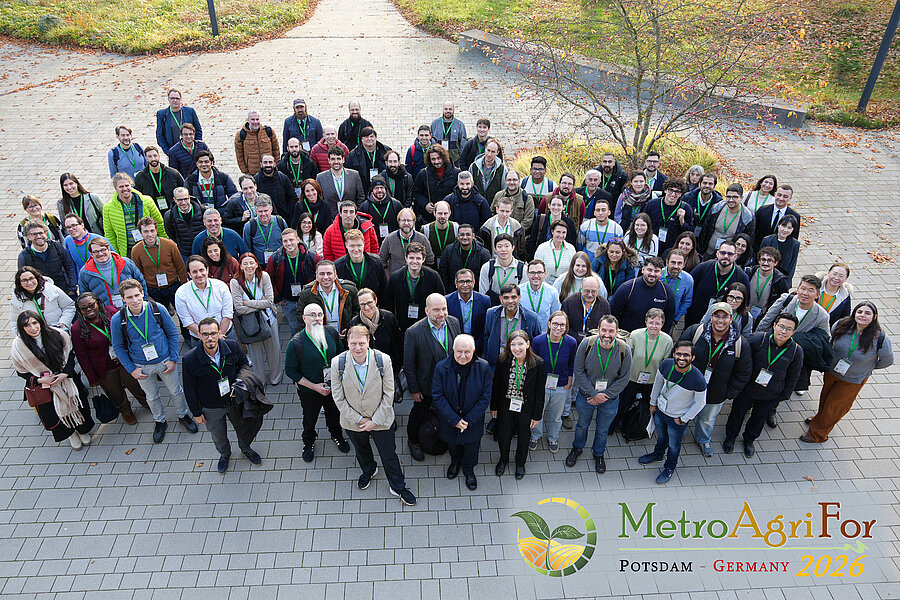
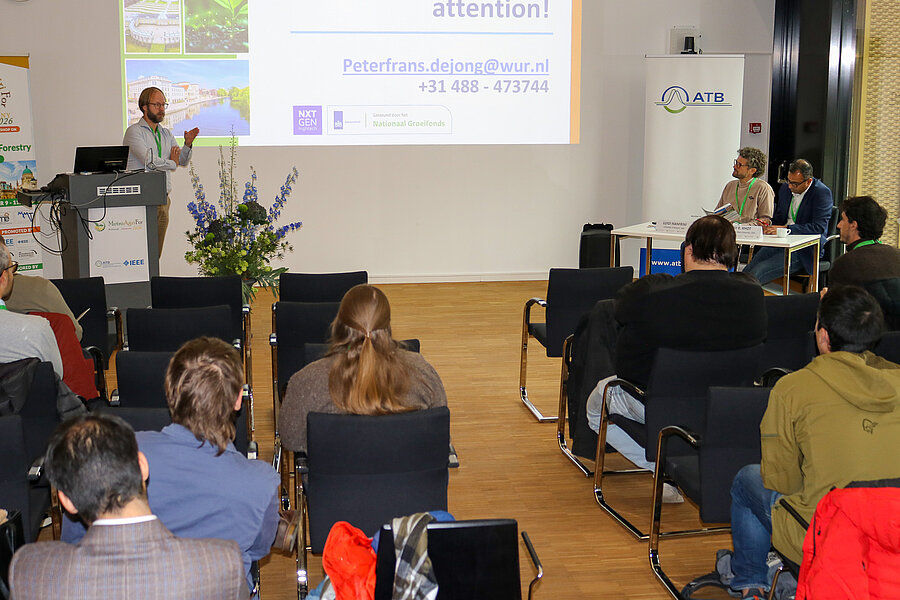
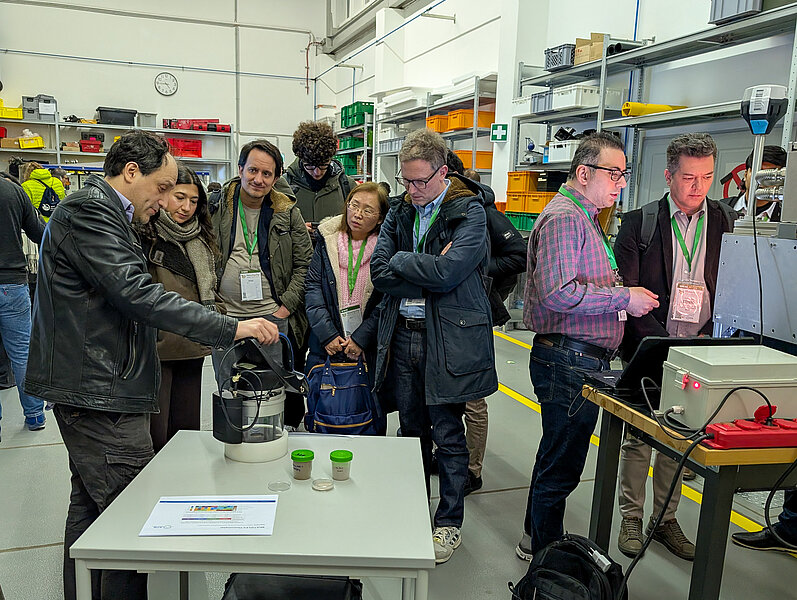
The IEEE METROAGRIFOR workshop provided an insight into state-of-the-art metrological approaches in agriculture, forestry and food production. Current research is driven by the challenges posed by climate change, digitalisation and the need for sustainable practices. The approximately 100 presentations from the research and industrial sectors demonstrated a clear, shared direction in the development of sensor technology, artificial intelligence (AI) and robotics to create data-driven, precise and automated solutions. The international workshop took place from 9 to 11 November at the Leibniz Institute for Agricultural Engineering and Bioeconomy.
A key focus was on AI, IoT and robotics. Numerous presentations featured machine learning methods such as Long Short-Term Memory (LSTM) for predicting soil moisture, Convolutional Neural Networks (CNNs) for determining fruit ripeness, and You Only Look Once (YOLO) architectures for detecting pests, diseases and fruit, as well as for monitoring bee colonies. There was also increasing exploration of cutting-edge methods such as deep reinforcement learning to optimise irrigation and explainable AI (xAI) to enhance the trustworthiness of models, as well as the use of AI agents in an agricultural context. Connectivity was provided via low-cost IoT nodes, often using LoRaWAN, which collected environmental data in real time. Autonomous systems, ranging from UAVs (drones) to UGVs (ground robots), were deployed for tasks such as mapping orchards, phenotypic analysis of plant populations and the targeted treatment of individual plants. New data infrastructures, such as digital twins for orchards and federated learning for geodata, enabled collaborative data sharing whilst ensuring the protection of sensitive data.
Specifically for the field of soil analysis, non-destructive methods such as Vis-NIR spectroscopy and laser-induced breakdown spectroscopy (LIBS) were presented to determine soil properties such as organic carbon, moisture and pH reliably and in situ. Satellite data from Sentinel, Landsat and PlanetScope were fused to generate yield forecasts, monitor vegetation condition and assess land-use changes, for example in post-conflict regions. At the plant level, multi- and hyperspectral imagery from UAVs enabled the creation of 3D point clouds for high-resolution phenotyping that went beyond conventional vegetation indices. This was complemented by ground-based remote sensing, such as scatterometers for monitoring plant development and mobile sensor systems for recording the degree of flowering in orchards.
Another key topic was crop production under climate change conditions, particularly in relation to water management. The contributions ranged from modelling water requirements and the optimal control of irrigation systems, through the detection of leaks in drip irrigation systems, to the development of mobile apps to support agricultural decision-making. At the same time, research was conducted into methods for mitigating the risks of frost and heat stress, such as predicting the surface temperature of apples. The research also highlighted approaches to restoring degraded agroecosystems and assessing climate suitability for the cultivation of specific crops. In the session on food quality, the focus was on the non-destructive quality assessment of fruit in order to optimise harvest times and storage conditions. Technologies such as NIR spectroscopy, optical sensors and millimetre-wave radar were used to determine the firmness, sugar content and degree of ripeness of apples, pears and nectarines.
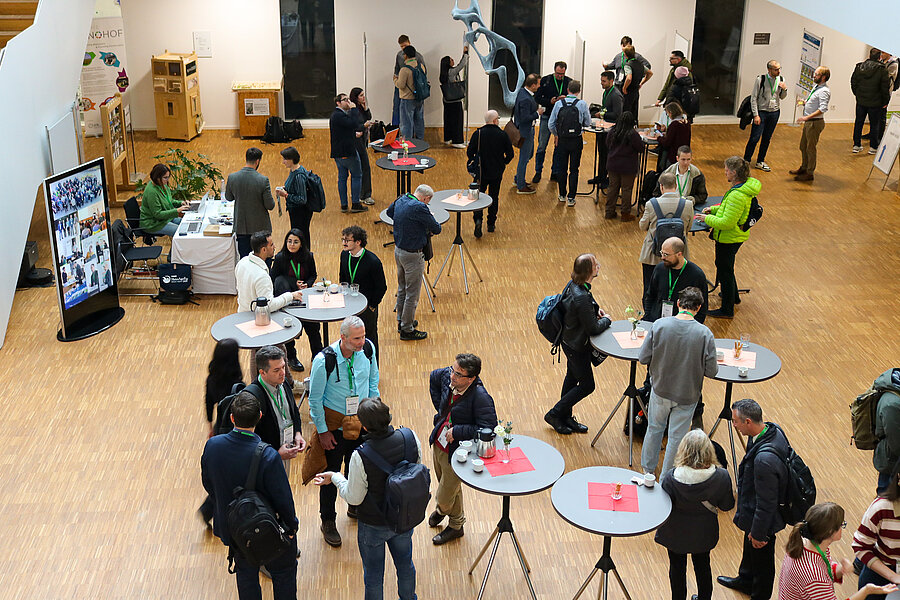
In addition to discussions on the latest research, opportunities for networking and hands-on experience were offered, specifically for digitised soil and plant analyses. A clear trend emerged from many of the discussions: the integration of multimodal data from a wide variety of sources, its analysis using advanced AI agents and models, and the implementation of the results via automated systems to make agricultural and forestry operations more precise, resilient and sustainable.
Further information and highlights can be found on the event page