





On the occasion of the UN Climate Change Conference COP30 in Brazil, the Leibniz Lab "Systemic Sustainability" hosted an international conference at the Federal University of Pará (UFPA) in Belém from 13 to 16 November 2025. The Leibniz Institute for Agricultural Engineering and Bioeconomy (ATB) played a key role in organising the event as co-organiser.
The four-day conference "Sustainability transformations and social-ecological dynamics of Amazonia and of other regions with special emphasis on systemic innovations and blue carbon ecosystems" brought together researchers, policy makers and representatives of civil society to discuss systemic solutions for the transformation of food systems in harmony with biodiversity and climate protection. A panel moderated by ATB scientist Dr Luma Rossi Ribeiro and her colleague Dr Lena Knopp (Leibniz Centre for Tropical Marine Research, ZMT) addressed the topic "From waste to value: Circular innovations in food and agriculture".
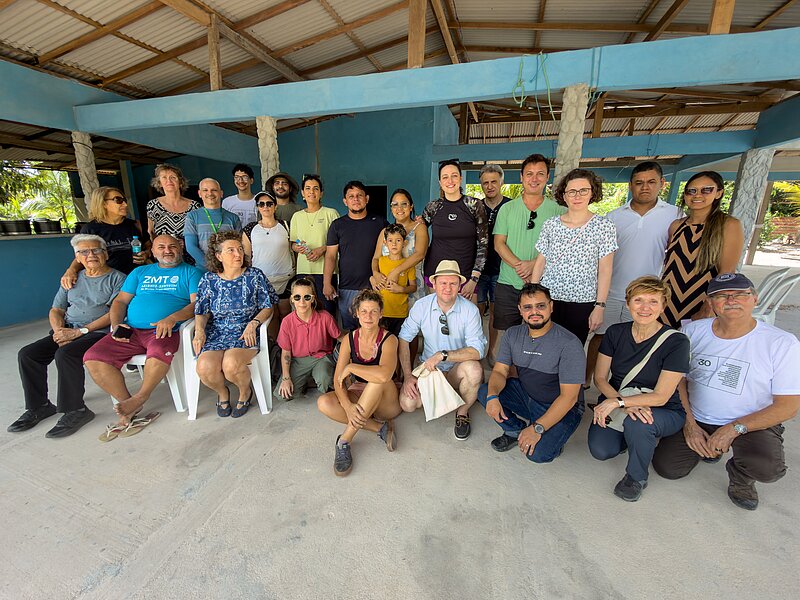
In her presentation, Dr Rossi Ribeiro introduced approaches to the bio-efficient production of alternative biomass. Interactive formats such as World Cafés promoted direct exchange on circular innovations and the challenges at the interface of biodiversity, climate and agriculture. A two-day excursion to local crab fishing communities in the coastal region of Bragança highlighted the urgency of finding sustainable solutions for the utilisation of large quantities of organic waste.
The conference is a central component of the Leibniz Lab ‘Systemic Sustainability’. As leaders of the work package on technological, social and political innovations, ATB and ZMT organised the event in Brazil to strengthen the dialogue between science and practice and to create a platform for linking research with the needs of local communities and political actors.
Background
The Leibniz Lab Systemic Sustainability is a network of over 40 Leibniz Institutes led by the Leibniz Institute of Ecological Urban and Regional Development (IÖR), which is dedicated to the transformation of food systems. The Lab is investigating solutions in pilot regions such as Berlin-Brandenburg (with scientific partners ATB, IGB and ZALF) and the Amazon coastal region in order to develop scalable and systemic innovations for a sustainable future.